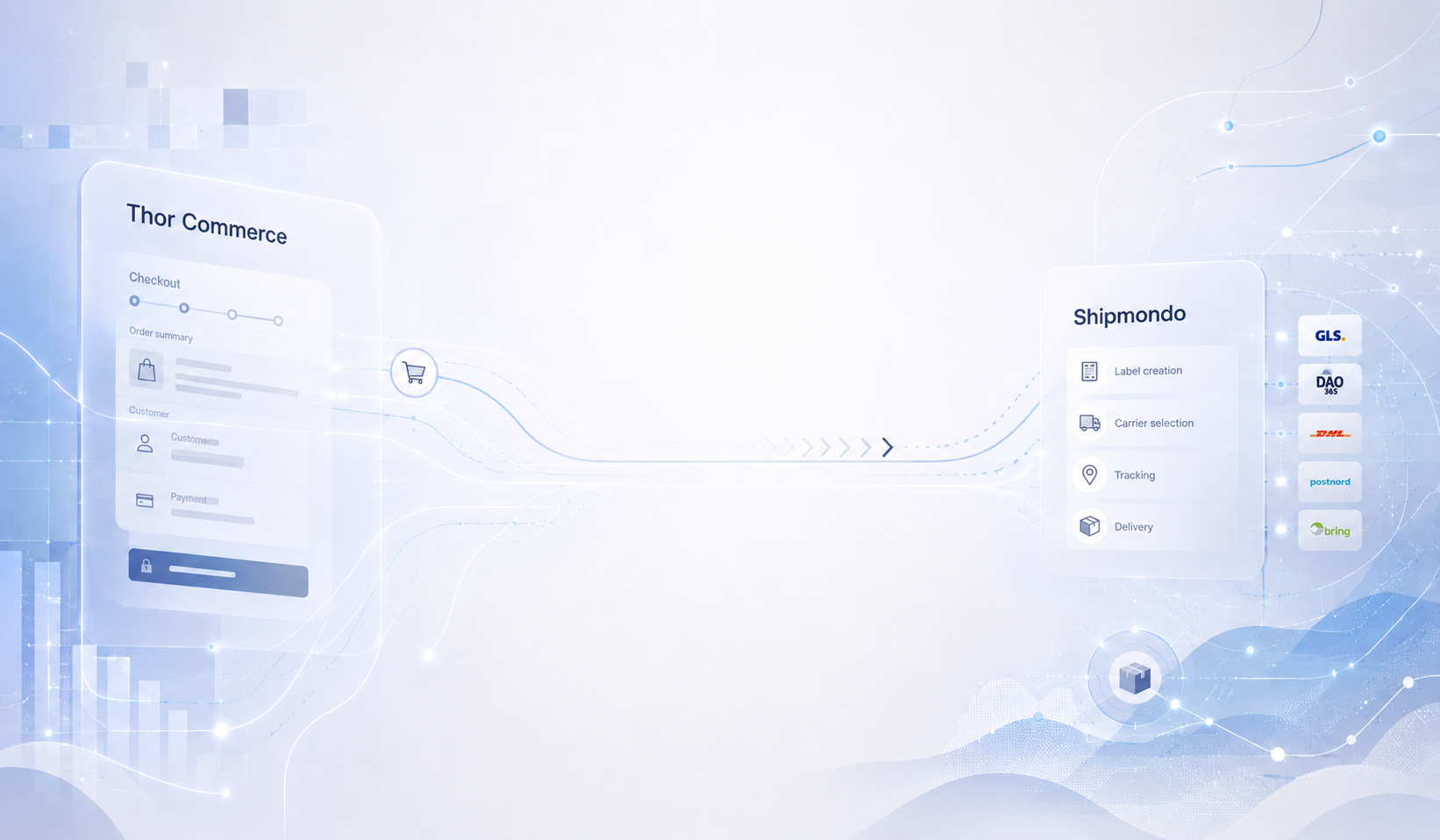
Shipping is one of the first places where a polished commerce experience can start to feel fragmented. Checkout lives in one place, carrier logic lives in another, and pickup-point delivery often becomes a manual workaround instead of a native part of the customer journey. Our new Shipmondo plugin for Thor Commerce is built to close that gap.
The result is a cleaner connection between commerce operations and delivery choices: merchants can configure Shipmondo-backed shipping methods inside Thor, expose relevant delivery services at checkout, and support pickup-point flows without building a custom bridge from scratch.
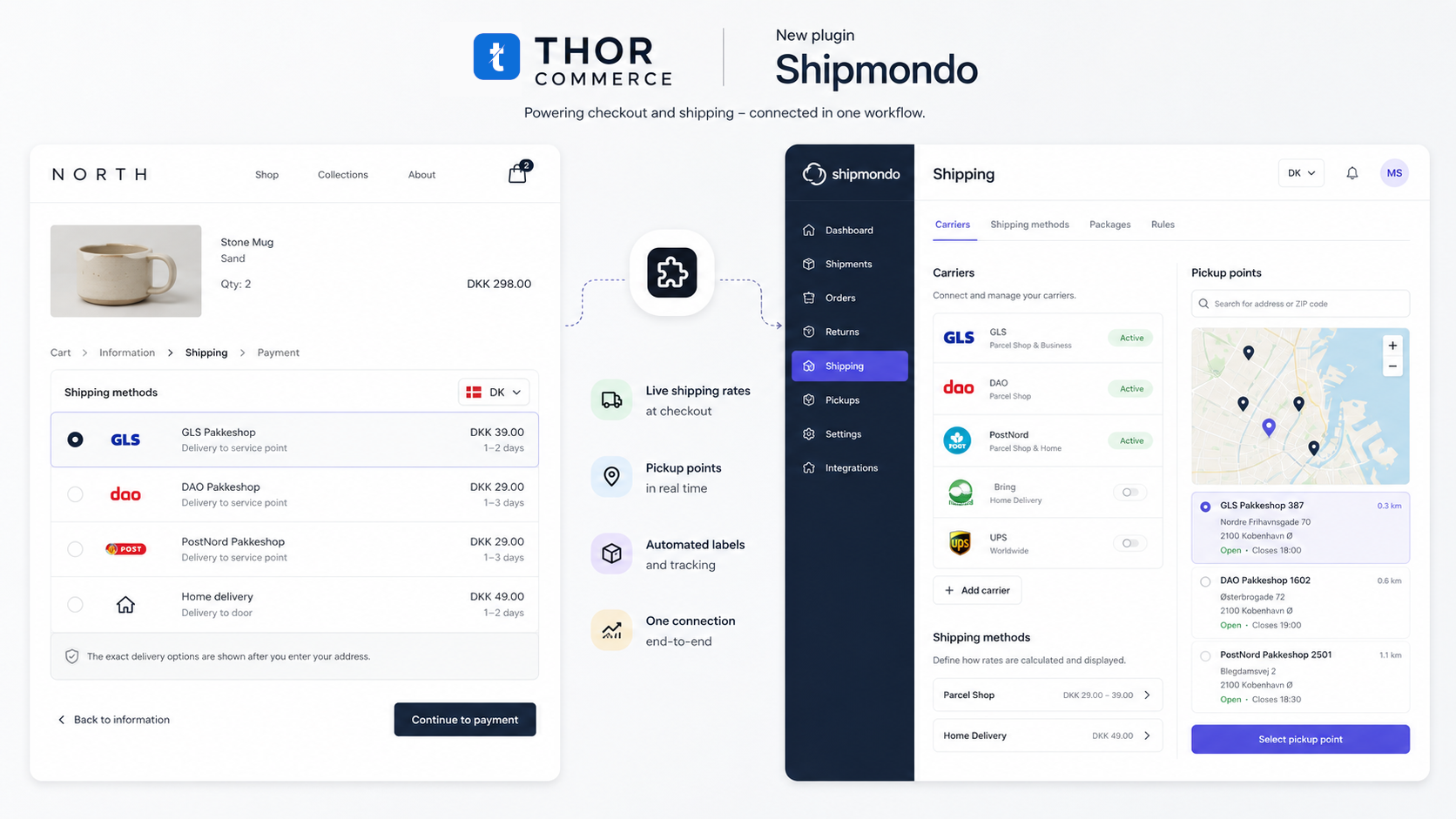
One shipping workflow inside Thor
The plugin is built as an embedded Thor app, so shipping setup stays inside the same operational surface as the rest of the platform. Teams can connect Shipmondo credentials, choose live or sandbox mode, and keep project-specific configuration tied directly to the store context they are working in.
That matters because shipping setup is rarely just a technical integration task. It is part of day-to-day merchandising and operations, and it needs to be accessible to the people who are actually managing delivery options.
Instead of handing shipping requirements off to a separate implementation cycle every time a carrier option changes, merchants get a more direct operational workflow. That shortens the distance between deciding how delivery should work and actually seeing those methods appear in checkout.
From carrier discovery to real shipping methods
Once connected, the plugin can discover carriers and services directly from Shipmondo. From there, merchants can create concrete shipping methods by country, carrier and service type, then define pricing, currency, pickup-point count and supporting customer-facing text.
This is where the plugin becomes especially practical. It does not stop at account connectivity or a technical proof of concept. It turns Shipmondo data into structured, editable shipping methods that commerce teams can actually work with inside Thor.
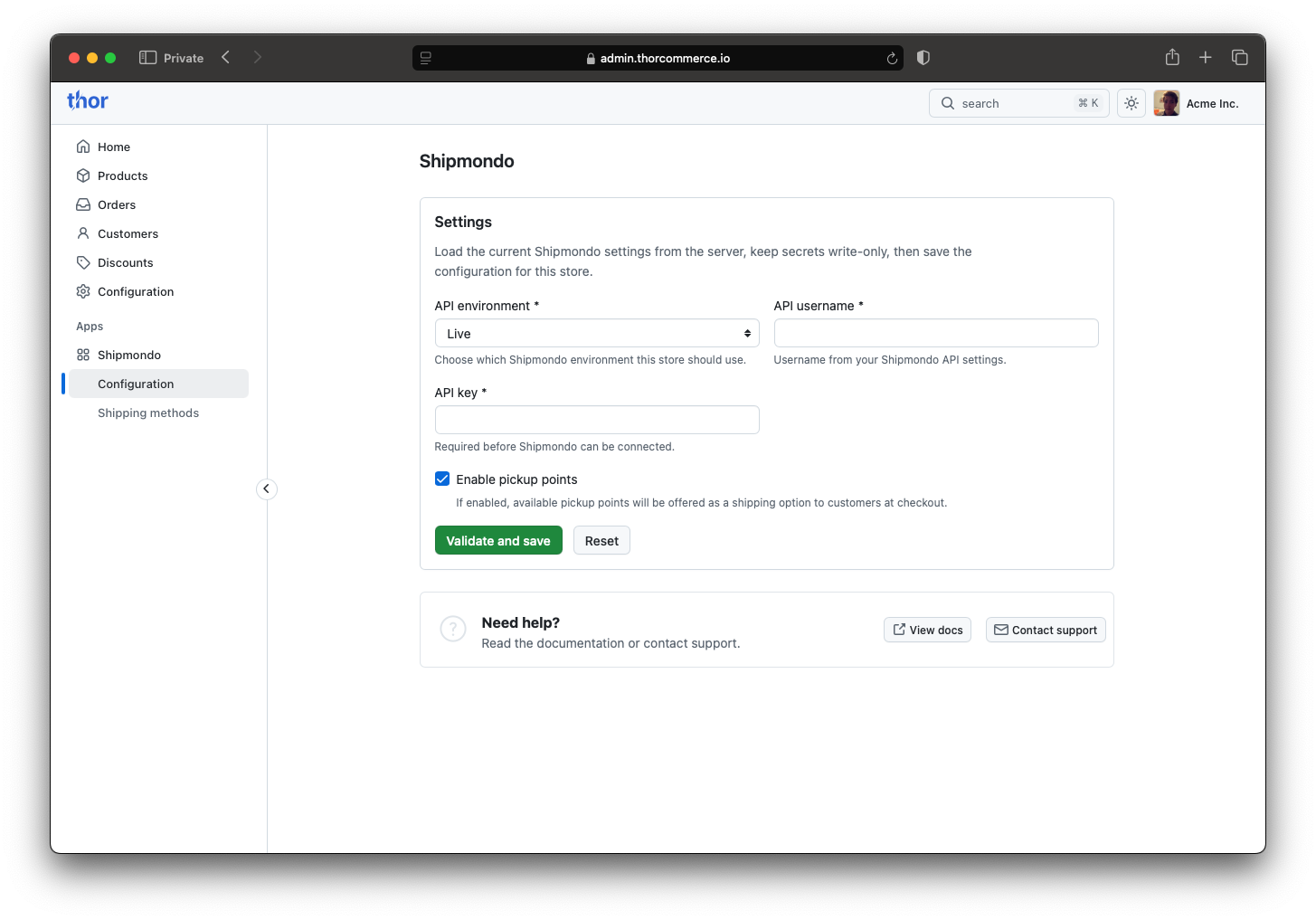
That configuration flow is important because shipping is rarely one-size-fits-all. A merchant may want different pricing by country, different service types by carrier, or different messaging depending on whether the method is home delivery or a service-point option. The plugin gives that logic a proper surface instead of burying it in custom code.
Instead of maintaining a loose spreadsheet of delivery rules or hardcoding shipping logic into the storefront, the app turns Shipmondo services into structured Thor shipping methods that are ready to be returned during checkout.
Pickup points as part of checkout, not an afterthought
Pickup-point delivery is where this integration becomes especially useful. For service-point products, the plugin can resolve nearby pickup points based on the cart shipping address, sort them by distance and return them as selectable delivery options. That gives merchants a much stronger final-mile experience in markets where parcel shops and collection points are the norm.
The important part is not just that pickup points exist. It is that they are treated as part of the shipping method resolution flow, not as a disconnected afterthought added later in the buying journey.
In practice, that means the delivery choice can feel much more native to the storefront experience. Customers are not forced through a generic shipping step and then redirected into a clumsy workaround. Relevant pickup choices can be derived from the same address and cart context that already shapes the rest of checkout.
Built for how Thor Commerce works
This plugin also fits the broader Thor architecture well. Thor already treats shipping as contextual commerce logic, and the Shipmondo app extends that model with an external shipping-method handler that can respond in real time with delivery choices shaped by project context, country and address data.
That makes the integration feel native to Thor rather than bolted onto it. The app sits in the dashboard where teams configure it, while the runtime behavior connects directly into the platform shipping flow where rates and delivery options are actually resolved.
That split between configuration and runtime is one of the strongest parts of the implementation. The merchant experience stays clean and embedded in the dashboard, while the delivery logic remains dynamic when Thor asks for shipping methods during checkout.
Why it matters
It shortens the path from shipping agreement to live checkout option.
It gives merchants a better way to support parcel-shop and service-point delivery.
It keeps shipping configuration inside the admin flow instead of scattering it across custom code and manual notes.
It creates a cleaner bridge between Thor Commerce checkout logic and real operational fulfillment choices.
For merchants, that translates into fewer fragile handoffs between commerce, operations and engineering. For implementation teams, it creates a more maintainable way to connect checkout behavior to the shipping services that actually power delivery on the backend.
A practical step toward more operational commerce
We like this plugin because it solves a very real problem without turning the solution into a maze. It gives merchants a practical way to work with Shipmondo inside Thor Commerce, while keeping the experience flexible enough for different markets, carriers and delivery models.
It also points in a direction we think matters more broadly: commerce platforms should not treat shipping as a thin settings page. Shipping influences conversion, trust, margin and customer satisfaction, so it deserves a better operational layer than most systems give it.
For teams building commerce experiences where shipping is a strategic part of conversion and customer trust, that is exactly the kind of integration that should exist: specific, operational and easy to use.